reopening

  • SGX Mainboard-listed diversified logistics group Chasen Holdings reported improved performance for its Technical & Engineering (“T&E”) segment, which lifted gross profit for the three months ended 31 Dec 2022 (“3QFY2023”) by 13% to S$7.6 million.

    The gross profit was achieved despite a 2% decline in quarterly revenue to S$42.3 million.

    Resumption of positive profit margin to the T&E projects and increase in solar panel installation projects were offset by delays in the Specialist Relocation segment due to the Dynamic Zero policy in the People’s Republic of China.

    Third-Party Logistics (“3PL”) activities softened.

    S$’000

    9M FY2023

    9M FY2022

    Change
    (%)

    Revenue

    122,831 

    127,324  (4)

    Gross Profit

    21,036 

    21,926  (4)

    Gross Profit margin

    17.1 

    17.2  (0.1) ppt

    Pre-tax profit

    2,496 

    4,850 (49)

    Net profit

    1,275 

    3,341  (62)

    Gross profit margin for 3QFY2023 increased 2.5% to 18.1%, as margins in all three business segments improved.

    Stock price

    6.1 c

    52-week
    range

    5.6 – 7.4 c

    PE (ttm)

    11.4

    Market cap

    S$24 m

    52-week change

    -23%

    Dividend 
    yield 
    (ttm)

    --

    P/B

    0.37

    Source: Yahoo!

    The Group recorded 9MFY2023 net profit after tax of S$1.3 million compared to S$3.3 million a year ago, mainly due to lower receipt of government grants, higher operations expenses and increased finance expenses amid higher interest rates.

    Net asset value per share amounted to 16.4 Singapore cents as at 31 December 2022 compared to 16.7 Singapore cents as at 31 March 2022.

    With the PRC’s recent lifting of COVID-related restrictions, the Group expects mid-term business recovery as projects resume.  Operating costs remain a challenge.

    While this may potentially be driving a slowdown in economic activities, it will push companies to accelerate their strategic shift to mitigate this risk through re-shoring and decentralizing their manufacturing footprint globally, presenting business opportunities for the Group’s Specialist Relocation and 3PL business segments.

    Specialist Relocation segment: The Group will continue to diversify into the semiconductor and automotive industries, while seeking opportunities within the PRC’s display panel sector as it transitions from TFT LCD screens to OLED technology.

    Chasen also plans to secure new projects from semiconductor and equipment manufacturers in Malaysia and Singapore, as well as electronics and PV solar module players in Vietnam and India.

     3PL: The Group broadly sees the demand for its cross-border transportation services peaking as pandemic-related disruption eases.

    However, business will remain resilient as customers, who switched from air and sea freight to the Group’s 3PL services during the pandemic, have seen value in Chasen’s outstanding service quality, which has been further enhanced with the recent integration of railway as an alternative mode of transport.

    In addition, business activities on warehousing, freight-forwarding and local/long-haul trucking was significantly higher and are expected to offset any potential decline in cross-border transportation services.

    Demand for warehouse service is expected to increase in the quarters ahead. In response, the Group will offer its local transportation services, adding value to customers, and lifting revenue.

    The Group is also participating in “SG Arrival Card” Cargo, a seamless clearance initiative that would greatly speed up the time required for the Group’s container truck drivers to clear the Singapore land checkpoints to less than five minutes, compared to manual paper clearance, which would take 10-15 minutes.

     T&E segment: The Group will build its pipeline of solar panel installation projects in Singapore and improve its component and parts manufacturing capabilities, with the aim to capture projects within emerging core technologies such as 5G, Internet of Things, MedTech and the automotive sector.

    The T&E business segment will focus on improving its bottom line significantly as it capitalizes on post-COVID economic recovery to grow the Group’s top line across the region.

    JustinLow120aJustin Low, MD of Chasen Holdings.Mr Low Weng Fatt, Chasen’s MD and CEO, said, “Chasen’s diversified business and geographical spread has allowed us to remain broadly resilient as well as capitalized on opportunities arising from our customers’ re-shoring, de-centralising production locations and adjusting their inventory strategies.

    "The lifting of all COVID restrictions in the PRC is positive news for the resumption of projects and a return to normalcy in the medium term."


  • THE CONTEXT

    • There are 2 Cs that are coming back: China and construction. Well, actually they are not related --  Chinese people are travelling more and the construction industry in Singapore and Malaysia are in an upcycle.

    30 upsideThere are 2 stocks related to the 2Cs which look under-appreciated but each has upside of ~30%, according to CGS-International in a recent report.

    Interestingly, the report delved into industry efforts to "make the Singapore market great again" as well as pointed to a bunch of value stocks.

    •  First was China Aviation Oil, which is experiencing tailwinds in the form of higher Chinese travel.

    It has a cash-rich balance sheet that can translate into higher dividends.

    Moreover, there's a push from the Chinese government for its listed state-owned enterprises to return excess capital to shareholders through higher dividend payouts.


    CAO staged a recovery in profit in 2023 and is set to extend the trend in 2024, according to analysts (see chart). 

    CAO profit forecast2024CAO stock currently trades at 4X PE after excluding its large cash balance.

    • The second stock highlighted by CGS was Hong Leong Asia.

    As part of the Hong Leong Group, HLA has 2 core businesses: Powertrains and Building Materials. 


    • Read more what CGS says below....


    CAO overview3.23

    • CAO supplies imported jet fuel to the civil aviation industry in China. CAO is 51.3%-owned by state-owned China National Aviation Fuel Group Limited, which holds the mandate to supply all jet fuel requirements in China.

    • CAO also markets jet fuel to airports outside China, and engages in international trading of jet fuel and other oil products, as well as carbon credits.

    • It has a 33% stake in Shanghai Pudong International Airport (SPIA). SPIA accounted for 62% of net profit in FY22.


    Excerpts from CGS International's report


    China Aviation Oil (CAO SP, Add, TP: S$1.20)

     We think CAO is set for a healthy earnings recovery trajectory over the coming quarters, backed by further outbound traffic recovery in China and increasing focus on higher-margin jet fuel transactions.

    CHINA AVIATION OIL

    Share price: 
    $0.90

    Target: 
    $1.20

    We like CAO as an undervalued play on China’s outbound traffic recovery, and lacklustre YTD share price performance has yet to price this in, resulting in undemanding valuations (7x CY25F P/E) which do not sufficiently reflect the group’s earnings recovery story ahead, we think.


    In addition to earnings, we believe dividends could remain elevated in FY24-25F.

    CAO has historically maintained a dividend payout ratio of c.30%, in line with its official dividend policy; we believe CAO could potentially announce special dividends in FY24F (similar to FY23) in view of its solid earnings growth, which translates into an elevated payout ratio of c.40%.

    In its latest results, CAO’s 1H24 core PATMI was a beat at US$42m (+61% hoh, +115% yoy), driven by elevated GPM (+0.15% pts yoy) from higher-margin jet fuel transactions and strong trading volume recovery.

    International outbound flights from China have recovered to c.85% of pre-Covid19 levels as at end-Sep 2024 (vs. c.77% at start of Jan 2024).


    "Net cash also remains solid at US$353m as at August 2024 (c.55% of current market cap)."

    We expect further recovery in outbound China flight traffic to directly drive gross profit (core jet fuel business) and associate profit growth (via 33%-owned refueling associate based at Shanghai Pudong International Airport).

    Our TP of S$1.20 is based on 9.5x CY25F P/E (2010-19 average).

    Re-rating catalysts include a strong recovery in outbound China flight volumes, strong and sustained GPM improvement, and favourable government policies spurring travel demand.

    Key downside risks include a global economic slowdown impacting China outbound flight volumes, and gross profit margin weakness from inability to source and execute higher-margin transactions.


    Hong Leong Asia (HLA SP, Add, TP: S$1.20)

    We believe Hong Leong Asia is an underappreciated proxy for the Singapore and Malaysia construction industry upcycle.

    Excluding listed subsidiaries/associates, HLA’s building materials unit segment (c.60% of 1H24 PATMI before corporate costs) has an implied valuation of S$172m (2x 12M-trailing P/E), based on latest market cap.

    HongLeongAsia overview10.24

    We also note a slew of corporate actions by Hong Leong Asia to improve shareholder value YTD, including
    1) its resumption of interim dividend (last declared in FY15),

    2) its subsidiary China Yuchai’s (CYD US, Add, TP: US$13.20) launch of US$40m share buyback plan (announced in Jun 2024; US$38.5m utilised as of Aug 2024), and

    3) China Yuchai’s introduction of equity incentive plans in respect of equity interests in subsidiary Guangxi Yuchai Marine and Genset Power (MGP), which has grown rapidly with strong profitability in the past few years.

    We see potential for MGP to pursue an IPO in the next 5 years.

    An independent valuation by Zhongming Valuer as at Dec 2023 estimated MGP’s fair value at c.Rmb2bn.

    As at end-FY23, MGP had a net asset value of Rmb1.3bn, vs. CYD’s Rmb12bn.

    For its latest results, Hong Leong Asia beat expectations by delivering 1H24 PATMI of S$50m (+61% yoy), which formed 66% of our FY24F forecasts.

    Both HLA’s core segments performed strongly in 1H24, with yoy PAT growth of 29% at its powertrain solutions segment and 35% at building materials segment.

    Reiterate Add on HLA as we expect strong PATMI growth in FY24F as HLA fires on all cylinders, benefiting from stronger construction activity levels and volume recovery of its diesel engine unit, with an SOP-based TP of S$1.20.


    Full report here


  • China Aviation Oil has a very long history on the Singapore Exchange, having listed way back in 2001 and a few years later filing for bankruptcy on huge losses from speculative options trading. Soon after, it was resuscitated financially and led by a new board. The Covid pandemic dealt a blow to its business which depends on aviation travel but it looks set to regain ground from here on.  


    Excerpts from OCBC Investment Research's 16-page initiation report

    Analyst: Ada Lim

    Night is darkest before dawn

    • China’s reopening resets the growth trajectory of its aviation industry 

    CHINA AVIATION OIL

    Share price: 
    $0.91

    Target: 
    $1.12

    • Short-term demand recovery and long-term  structural tailwinds in place 

    • Healthy balance sheet supports expansionary  strategy


    CAO overview3.23 

    Investment thesis 

    China Aviation Oil (CAO) is the largest physical jet fuel  trader in the Asia Pacific (APAC) region. A key supplier  of imported jet fuel in the civil aviation industry in the People’s Republic of China (PRC), CAO is a strong proxy to the growing Chinese aviation industry.

    Although 
    CAO’s financial performance has been battered in  recent years by the pandemic and an extended period 
    of lockdowns due to China’s zero-Covid policy, it is well positioned to capture the recovery in jet fuel demand with China’s reopening, given its entrenched presence in China and status as a market leader in the region. 

    Beyond this immediate catalyst, the increasing affluence of the APAC region and burgeoning middle class in China will support the long-term growth of the regional aviation fuel market, making CAO an attractive multi-year investment story. 

    Investment summary 

    China’s aviation industry hit rock bottom in 2022– CAO’s FY22 results were in line with consensus expectations. Total revenue fell 6.7% to USD16.4b on  the back of a 40.6% decline in total supply and  trading volume.

    CAO revenue2022Share of results from associates also fell 24% to USD17.9m, mainly due to a 17.2% decline in contributions from Shanghai-Pudong International Airport Aviation Fuel Supply Company (SPIA), which struggled with lower refuelling volumes during  protracted lockdowns in Shanghai.

    Total expenses rose 37.8%, driven by a USD2.8m increase in staff costs following the consolidation of CNAF Hong Kong Refueling Limited as a subsidiary.

    CAO profit2022Altogether, CAO reported a net profit of USD33.2m, down 17.8% from 
    USD40.4m in FY21.

    It has proposed a final dividend of 1.6 cents per share (versus 1.9 cents per share in FY21). 

    China’s reopening should support near-term  recovery… – With the relaxation of China’s zero- Covid policy, the release of pent-up demand for  airline travel should translate to a significant rebound  in the demand for jet fuel.

    We expect recovery of air  travel in China to be led by domestic flights in 1Q23, while international travel sees a meaningful rebound  from late 2Q23 or 2H23.

    At the same time, recovery in the broader APAC region remains supportive.

    This will benefit CAO, whose top line is primarily dependent on its trading volume.

    SPIA will be a key oil-related  asset to watch out for, as it is the exclusive supplier of jet fuel and refuelling services at Shanghai Pudong International Airport (Pudong Airport), and contributed to ~59% of CAO’s net profits in FY2019.  

       … while structural tailwinds support long-term growth– (i) APAC is expected to lead the growth of the  global aviation fuel market, with higher airline travel demand underpinned by the presence of many increasingly affluent developing countries in the region, as well as a burgeoning middle class in China.

      CAO’s status as a market leader in the region positions it well to capture this growth over the next  few years.

    (ii) Airlines are increasingly transitioning towards sustainable aviation fuel (SAF), which is expected to contribute to 65% of the reduction in carbon emissions needed by the aviation industry to reach net-zero by 2050.

    CAO is already looking to incorporate SAF into its product mix, which could potentially lend CAO a first mover advantage to capture demand from airlines in APAC. 

    Potential to deploy cash to augment growth– CAO  has historically maintained a strong balance sheet  and a healthy net cash position.

    Given a slow but  steady track record of acquisitions, we see potential for the company to deploy cash either to acquire new, synergistic oil-related business assets, or to expand its current operations in a manner that will be accretive to the company’s earnings – thereby unlocking further value for shareholders. 

    Initiate coverage on CAO with SGD1.12 FV estimate– All things considered, we forecast a fair value  estimate of SGD1.12 for CAO based on the Dividend  Discount Model (DDM) methodology, with cost of equity elevated at 10.1% on the back of higher risk-free rates and country-specific risks, and a terminal growth rate of 2%.

    We assume that CAO’s jet fuel  supply and trading business will recover to a  conservative 55% of 2019 levels, as recovery may be clouded by geopolitical tensions weighing on tourists’ sentiments.

    CAO is currently trading at an elevated FY23 price-to-earnings (P/E) ratio of 10.3x, driven by 
    investor optimism on the back of China’s reopening, even as earnings have yet to catch up.

    However, we still see further upside from current levels (based on closing price on 22 Mar 2023), given the supportive secular tailwinds in place. 


    Potential catalysts 

    • Faster and stronger than expected recovery in Chinese air travel 
    • Deployment of cash through accretive acquisitions 
    • Introduction of initiatives to improve profitability

    Investment risks 

    • Slower than expected reopening of China’s  borders, or a reinstatement of zero-Covid policies 
    • Geopolitical tensions
    • Regulatory risks 

  • • China Aviation Oil has a very long history on the Singapore Exchange, having listed way back in 2001 and a few years later filing for bankruptcy on huge losses from speculative options trading. Soon after, it was resuscitated financially and led by a new board. 

    • The Covid pandemic dealt a blow to its business which depends on aviation travel. With domestic and international travel picking up pace, CAO’s supply volume of jet fuel should rise accordingly.

    Its business has been low in capex and high in cash generation, leading to a cashpile which is about 64% of its current market cap (S$787 m).

    • However, margins are thin from operating a cost-plus model whereby it earns a fixed margin for every unit of fuel it supplies. Read more what Phillip Securities says below....


    CAO overview3.23

    • CAO supplies imported jet fuel to the civil aviation industry in China. CAO is 51.3%-owned by state-owned China National Aviation Fuel Group Limited, which holds the mandate to supply all jet fuel requirements in China.

    • CAO also markets jet fuel to airports outside China, and engages in international trading of jet fuel and other oil products, as well as carbon credits.

    • It has a 33% stake in Shanghai Pudong International Airport (SPIA). SPIA accounted for 62% of net profit in FY22.


    CAO cashFY23Screenshot of a section of CAO's cashflow statement for 2023. The cashpile of US$373 m is the equivalent of S$505 million, or 64% of its current market cap (stock price: 91.5 cents).


    Excerpts from Phillip Securities' report

    Analyst: Peggy Mak

    Lift-off in international flights

     The results beat our estimates by 22%, due to stronger-than-expected contributions from 33%-owned SPIA. 

    CHINA AVIATION OIL

    Share price: 
    $0.91

    Target: 
    $1.05

     Net profit rebounded 75.5% due to
    1) stronger demand for jet fuel with borders reopened from early 2023;
    2) higher margin per metric ton with increased direct sales with airline customers; and
    3) SPIA’s net profit jumping 61% YoY.

    Net cash at year-end was US$373mn (S$0.623/sh). Full-year dividend was raised to 5.05 Sct (FY22: 1.6 Sct), a yield of 5.4%.

     China’s international air traffic is still at 37% below pre-Covid level. Flights are progressively being restored with further normalization of aviation services. China accounted for 62% of total revenue in FY23.

     Maintain BUY call and raised TP to DCF-derived TP to S$1.05 (prev. S$1.01).
    We lifted our FY24e net profit estimates by 17% to factor in improved gross margin.


    The Positives

     Gross profit per metric ton jumped to US$2.53 in FY23 (FY22 US$1.75/mt). The margin in 2H23 was 145% higher YoY at US$3.78/mt.

    This was achieved through engaging in more end-to-end sales, sourcing products from refinery for delivery to the airline customers.


    CAO profit2022
    This is compared to the typical low-margin back to back oil trading transaction. Higher volume also helps to lower unit fixed cost.

     Contributions from 33%-owned associate Shanghai Pudong International Airport Aviation Fuel Supply Co Ltd (SPIA) grew 61% to US$31mn.

    SPIA also paid US$23mn to CAO in FY23, 9.5% higher YoY.


    We expect a higher payout in FY24e after the strong FY23. 
     

    The Negative

    Provided for impairment of US$12mn for goodwill (US$3.4mn) and investment in an associate (US$8.7mn), thus lowering net profit.
     

    peggymak4.22Peggy Mak, research manager, Phillip SecuritiesOutlook

    Volume is expected to continue to improve as China further restores bilateral flights that were cut during the pandemic.

    Its US jet fuel supply operation would also benefit from resumption of US-China flights to 100 round-trips at end March.

    Maintain BUY and raised DCF-derived TP to S$1.05 (WACC 15%, terminal growth 1%).

    We have also lifted our FY24e net profit estimates by 17% to account for a higher profit per ton.


    Full report here

  • • China Aviation Oil has a very long history on the Singapore Exchange, having listed way back in 2001 and a few years later filing for bankruptcy on huge losses from speculative options trading. Soon after, it was resuscitated financially and led by a new board. 

    • The Covid pandemic dealt a blow to its business which depends on aviation travel. With domestic and international travel picking up pace, CAO’s supply volume of jet fuel should rise accordingly.

    Its business has been low in capex (zero for the past 3 years and forecast at US$2 million this year) and high in cash generation, leading to a cashpile which is about 96% of its current market cap (S$740 m).

    • However, margins are thin from operating a cost-plus model whereby it earns a fixed margin for every unit of fuel it supplies. Read more what Phillip Securities says below....


    CAO overview3.23

    • CAO supplies imported jet fuel to the civil aviation industry in China. CAO is 51.3%-owned by state-owned China National Aviation Fuel Group Limited, which holds the mandate to supply all jet fuel requirements in China.

    • CAO also markets jet fuel to airports outside China, and engages in international trading of jet fuel and other oil products, as well as carbon credits.

    • It has a 33% stake in Shanghai Pudong International Airport (SPIA). SPIA accounted for 62% of net profit in FY22.


    CAO cashflow11.23Screenshot of a section of CAO's cashflow statement for 1H23. The cashpile of US$534.3 m is the equivalent of S$711 million, or 96% of its current market cap.


    Excerpts from Phillip Securities' 11-page initiation report

    Analyst: Peggy Mak

    Lift-off in international flights

    • International passenger traffic in China is up 18 fold YTD September 2023 and only 33% of pre-pandemic levels. We expect international travel volume recovery to gain pace in FY24e, fuelling demand for jet fuel at international airports.

    CHINA AVIATION OIL

    Share price: 
    $0.87

    Target: 
    $1.01

     China’s jet fuel consumption has risen by CAGR of 8.4% over the last 10 years. More airports have been added over the years to cope with the rise in air travel demand. We think CAO could potentially expand its footprint to international airports in other Chinese cities. 

    • We initiate coverage with a BUY recommendation and discounted cash flow TP of S$1.01.

    We expect earnings to double over the next two years and around 64% of the market cap is in net cash of US$308mn (as at end 2022).


    Hightlights 

     China air travel demand rebounded after borders re-opened in early 2023. Air travel volume surged by 80% YoY in the first eight months of 2023, after the lifting of Covid mobility restrictions, thereby pushing up consumption of jet fuel.

    The recovery is led by domestic travel. International flights are still at 20-30% of pre-Covid levels.

    As more international flights are restored, we expect jet fuel demand at the major international airports in China to return to pre-Covid levels by FY25e. About 60% of petroleum and refined products are imported.


    CAO profit20222023 profit forecast by Phillip Securities. Translates to a 1.7 S'pore cent/share first & final dividend pay-out. CAO has a dividend policy to pay out 30% of the Group’s annual consolidated net profits attributable to shareholders.
     CAO could potentially supply jet fuel to more international airports in China. China’s jet fuel consumption has risen at a 10-year CAGR of 8.4% from 2011-2021, and 9.7% if year 2020 were excluded, mirroring the growth in air travel demand.

    Correspondingly, China has been adding airports at a CAGR of 3.4% over the last 10 years.

    CAO mainly supplies to the five key international airports currently, but we think it has potential to expand its footprint to international airports in other Chinese cities.

     The three major Chinese carriers plan to grow their fleet by 6-18.5% in the next three years. Air China, China Eastern Air and China Southern Airlines together account for twothirds of China air transport volume.

    We think the fleet expansion plan signals optimism that rising affluence and mobility and increased urbanization will underpin demand for air transport.


    peggymak4.22Peggy Mak, research manager, Phillip SecuritiesInitiate coverage with a Buy recommendation and TP of S$1.01.Our TP is based on the discounted cash flow model.

    Its operations are asset-light.

    The balance sheet comprises mainly cash (as at Dec 22: S$0.49/share), investments in associates and working capital.

    We expect ROIC to rise to 10% in FY23e and 14.4% in FY24e(FY22: 5.6%).


    Full report here

  • THE CONTEXT

    • China today (24 Sept) unveiled fresh stimulus to boost its economy, sending Shanghai and HK stocks on a rally. Interest rate cuts and measures to revive the local stock markets could lead to increased consumer spending, including on travel and tourism.

    • On the Singapore Exchange, China Aviation Oil (CAO) is one of the possible beneficiaries of a recovery in Chinese consumption and, specifically, aviation travel.

    • The Covid pandemic dealt a blow to its business. With domestic and international travel picking up pace, but still below pandemic levels, CAO’s supply of jet fuel should rise accordingly.

    CAO staged a recovery in profit in 2023 and is set to extend the trend in 2024 (see chart). 

    CAO profit forecast2024CAO stock currently trades at 3.6X PE after excluding its large cash balance.

    • While CAO's profits have been recovering, its stock price has continued to languish.

    CAO chart9.24Chart: ReutersPhillip Securities and Lim & Tan Securities have target prices of $1.05 and $1.24, respectively.

    CAO's business is low in capex and high in cash generation, leading to a US$354 million cashpile (zero debt) which is about 62% of its current market cap (S$735 m).

    • However, margins are thin as this is a volume game: Gross margins are merely 0.4%! CAO operates a cost-plus model whereby it earns a margin for every unit of fuel it supplies. Volatile oil prices, among other things, pose a risk.

    Read more what Phillip Securities says below....


    CAO overview3.23

    • CAO supplies imported jet fuel to the civil aviation industry in China. CAO is 51.3%-owned by state-owned China National Aviation Fuel Group Limited, which holds the mandate to supply all jet fuel requirements in China.

    • CAO also markets jet fuel to airports outside China, and engages in international trading of jet fuel and other oil products, as well as carbon credits.

    • It has a 33% stake in Shanghai Pudong International Airport (SPIA). SPIA accounted for 62% of net profit in FY22.


    Excerpts from Phillip Securities' report

    Analyst: Liu Miaomiao

    Spike in air traffic

    • Revenue for 1H24 increased by 20% YoY to US$7.5bn, slightly below expectations and accounting for 44% of our FY24e forecast.

    The revenue growth is primarily attributed to a rise in oil prices and an increase in supply and trading volume (+7.5% YoY). 

    CHINA AVIATION OIL

    Share price: 
    $0.86

    Target: 
    $1.05

    • Net income soared by 117.8% YoY to US$42.4mn for 1H24, in line with our forecast, forming 54% of our FY24e estimates.

    The jump came from SPIA’s 154.9% YoY rise to US$22.38mn, driven by an uptick in international air demand that led to higher refueling volumes.

    Gross profit rose 127% YoY to S$24.2mn from increase contribution of end -to -end sales and contango curve.


    • 2024e earnings supported by the recovery in international air traffic in China, which we anticipate will reach c.90% of pre-pandemic levels (currently 25% below pre-COVID levels).

    We are positive on CAO as the largest physical importer in China and associate SPIA, the sole jet fuel supplier for international flights at Shanghai airport.


    We maintain our FY24e earnings forecast and BUY recommendation with an unchanged DCF-TP of S$1.05.

    Outlook
    CAO is diversifying its geographical presence outside of China, although revenue from the PRC still accounts for 75% of its total income. 


    "According to a report from the Civil Aviation Administration of China, international air passenger demand in China grew rapidly in the first half of 2024, with a remarkable rebound exceeding 80% of pre-pandemic levels for 5 consecutive months since February 2024 and further growth in the international air passenger traffic is expected in the second half of the year."
    --China Aviation Oil, 14 Aug 2024 media release

    We expect higher contributions from other regions as several partnerships, particularly in Korea and the US (+30%YoY), are progressing well.

    We believe there is an good opportunity for CAO to increase its payout ratio or announce a special dividend, given its current cash-rich position of US$353mn.

    In addition State Owned Enterprises have been encouraged to raise dividends.


    peggymak4.22Liu Miaomiao, analystMaintain BUY with an unchanged TP of S$1.05

    Earnings will be supported by a recovery in international air traffic in China, which we expect to reach c.90% of pre-pandemic levels (currently around 25% below pre-COVID levels).

    We maintain our BUY recommendation with an unchanged DCF-TP of S$1.05.


    Full report here

  • THE CONTEXT

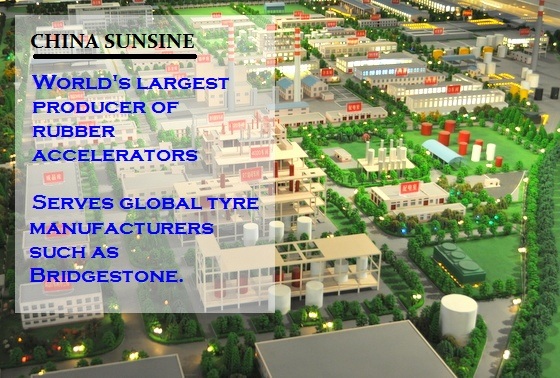
    chart controlroom8.25Background photo: Control room which monitors operational and production systems at China Sunsine.

    • China Sunsine stock (75 cents) has risen 69% year-to-date, a long awaited rerating for its shareholders. The business' enduring robustness and strong cashflow have been key attractions for them. 


    You can see that in the company's growing cashpile through the years even as it spent on R&D and regularly expanded its production capacity for chemicals that go into tyre manufacturing. 

    • On top of that, it has been paying dividends, distributing more than RMB 1 billion since its 2007 listing on the SGX, which raised RMB 264 million.


    YEAR

    '19

    '20

    '21

    '22

    '23

    '24

    1H25

    Dividend (SG cents)

    1

    1

    2

    3

    2.5

    3

    0.5


    • Check out this chart (and story):


    cash 10years8.25

    China Sunsine operate
    s in a competitive industry with volatile prices for input raw materials, which have weeded out a number of players, leaving behind just a few sizeable Chinese peers.

    That explains why as the world's largest producer of rubber chemicals used in tyre manufacturing, China Sunsine has seen its profitability cruise higher in some years, and lose altitude in others.

    • 
    See excerpts below of an 18 Aug report by UOB KH, the only broker covering the stock currently...


    Excerpts from UOB Kay Hian report

    Analysts: Heidi Mo & John Cheong

    China Sunsine Chemical (CSSC SP) 

    1H25: Earnings Stretch As Rubber Capacity Expands; Raise Target Price By 19%

    Sunsine’s 1H25 earnings of Rmb243m (+29% yoy) came in above expectations, forming 56% of our 2025 forecast.

    This was driven by lower R&D expenses and record-high sales volume.

    China Sunsine

    Share price: 
    75 c

    Target: 
    75 c

    Revenue fell 3% yoy to Rmb1,690m on weaker ASPs, but gross margin held firm at 24.6%.

    A special interim dividend of 0.5 S cent/share was declared.

    Looking ahead, ongoing projects will lift annual capacity by 7% by 2026.

    Maintain BUY with a raised target price of S$0.75, implying 3x 2026F ex-cash PE


    RESULTS
    Earnings beat on lower R&D. China Sunsine Chemical (Sunsine)’s 1H25 revenue of Rmb1,690 (-3% yoy) and earnings of Rmb243m (+29% yoy) formed 48% and 56% of our full-year forecasts respectively.
     

    The earnings outperformance was mainly due to a sharp reduction in R&D expenses to Rmb4.6m (vs Rmb69.9m in 1H24), alongside a record-high sales volume which helped offset softer ASPs.

    Record sales volume. Sales reached a new half-year high of 109,695 tonnes (+4% yoy), with growth across all product categories: rubber accelerators (+1% yoy), insoluble sulphur (+16% yoy), and anti-oxidants (+2% yoy).

    Both domestic and export volumes rose 4% yoy, driven by proactive market share capture in China and stronger demand from Chinese tyre makers in Southeast Asia. 

    Fortress balance sheet
    sunsine3

    "Sunsine remains debt-free with Rmb2,234m (approximately S$398m) in cash as at 30 Jun 25. Net assets per share stood at Rmb451.3 cents (approximately S$0.80), with net cash per share at S$0.42. Current ratio remains robust at 7.5x, highlighting solid financial flexibility."
    - UOB KH

    Margins remain resilient. Despite the 7% decline in ASPs to Rmb15,195/tonne, gross profit slipped only 4% yoy to Rmb416m, with the gross margin holding steady at 24.6% (-0.2ppt yoy).

    This reflects stable profitability amid the competitive pricing environment.

    Special dividend declared. To commemorate its 30th anniversary, the board declared a special interim dividend of 0.5 S cent/share.

    STOCK IMPACT
    • Challenging backdrop, steady demand. Sunsine expects trade uncertainties, geopolitical risks and persistent overcapacity to continue to weigh on ASPs.

    However, China’s economy remains robust, with 1H25 GDP yoy growth of 5.3% and auto sales up 11.4% yoy.

    Replacement tyre demand also continues to be strong at 70% of total consumption, while government measures to curb low-price competition and phase out outdated capacity should support healthier long-term industry conditions.

    Capacity ramp-up to drive growth. Sunsine’s ongoing projects include a 30,000 tonnes/annum insoluble sulphur expansion (commercial production expected by 4Q25), two solvent-based Mercaptobenzothiazole (MBT) projects at Hengshun and Weifang (trial runs by end-25 and early-26 respectively), and the conversion of rubber accelerator lines at Shandong Sunsine (early-26).

    By 2026, total capacity is set to rise 7% to 272,000 tonnes, with innovations such as solvent-based MBT production enhancing green manufacturing, improving operational efficiency, and strengthening its competitive advantages.


    EARNINGS REVISION/RISK
    • We have revised our 2026-27 earnings forecasts upward by around 2-3%, after factoring in Sunsine’s planned capacity expansion.

    We expect the additional output from the new facilities and conversion of accelerator lines to support stronger sales volumes.

    VALUATION/RECOMMENDATION

    Heidi MoHeidi Mo, analyst• Maintain BUY with a 19% higher target price of S$0.75 (S$0.63 previously),after rolling over our valuation base year to 2026 and applying a higher valuation multiple of 9.4x 2026F earnings (+1.5SD to mean PE), vs the previous 7.5x 2025F earnings (+1SD to mean PE).

    The higher multiple captures Sunsine’s stronger earnings visibility from upcoming capacity expansions.

    At the current price, the stock trades at an attractive 3x 2026F ex-cash PE while offering a decent 4.4% 2026 yield.


    SHARE PRICE CATALYST
    • New manufacturing capacities commencing production.
    • Higher ASPs for rubber chemicals.
    • Higher-than-expected utilisation rates


    Full report here

  • THE CONTEXT

    • The large cashpile perhaps was hard to ignore. Or maybe it's the recent news of Chinese economic stimulus.

    Whichever, China Sunsine received kudos from UOB Kay Hian in a report today, which raised its target price from 46 cents to 58 cents.

    • It has been a most under-appreciated fact that China Sunsine, despite an ambition to continually expand production capacity, had a growing cashpile that often was nearly equal to its market cap.

    Check out this chart (an
    d story) we put out in Aug 2024 when the stock was 37 cents:

    Alpha China10.24

    China Sunsine, whose stock has recently risen to 48 cents, operate
    s in a very competitive industry that has weeded out a number of players, leaving behind just a few sizeable Chinese peers.

    As the world's largest producer of rubber chemicals used in tyre manufacturing, China Sunsine has seen its profitability cruise some years, lose altitude in others, or just soar on tailwinds (see chart).

    profit 9.24

    Certainly, compared to 17 years ago when it listed on the Singapore Exchange, its pre-tax profit has soared as much as 10x as the chart above shows:

    • 
    See excerpts of UOB KH's take below...

     
    Excerpts from UOB Kay Hian report

    Analysts: Heidi Mo & John Cheong

    China Sunsine Chemical (CSSC SP) 

    Safe Proxy To China And Oil Price Recovery With Good Yield; Raise Target Price By 26%

    As the Chinese economy recovers with the recent stimulus rollout and higher oil prices brought about by the Middle East conflict, Sunsine’s demand and ASPs may benefit.

    We believe Sunsine is a safe proxy to China’s recovery play as it is deeply undervalued at 2x ex-cash 2024F PE, trading at a 40% discount to its book value.

    Sunsine’s regular share buyback is a signal of its positive outlook and stock price undervaluation.

    Maintain BUY with a 26% higher target price of S$0.58 (from S$0.46).


    WHAT’S NEW
    Potential improvement in demand and ASPs from stronger Chinese economy and oil prices. China’s latest stimulus measures have improved investor sentiment and may boost consumer confidence.

    China Sunsine

    Share price: 
    48 c

    Target: 
    58 c

    In addition, oil prices have risen due to the Middle East conflict.

    In turn, China Sunsine Chemical’s (Sunsine) demand could see an uptick in the coming months on the back of stronger demand for vehicles as well as better ASPs as Sunsine’s product is a derivative of petroleum products.

    During Jul-Sep 24, ASPs have been flattish on the back of stable raw material prices. Meanwhile, China’s GDP grew 5% in 1H24.

    Good dividend yield of around 5% backed by strong balance sheet. Sunsine provides an attractive yield of around 5%, supported by its robust cash balance of Rmb1,751m (+4% hoh) as of 1H24.

    This translates to Rmb1.82/share (S$0.34/share) or around 70% of its market cap.

    This provides ample room for Sunsine to potentially raise its dividend and continue to perform share buybacks. Sunsine has bought back 3.8m shares for 2024 since the start of its 2024 share buyback plan on 26 Apr 24.

    Expect steady volume growth on the back of strong demand. Sunsine achieved stronger rubber chemical sales volume (+6% yoy) in 1H24. This was driven by higher international sales volume (+20% yoy) from increased capacity utilisation rates for tyre manufacturers based in Southeast Asia, partially offset by lower domestic demand (-2% yoy).

    As more Chinese tyre manufacturers look to Southeast Asia to beef up production, we expect international sales volume to grow further.

    Moreover, automakers reported a 6% yoy increase in auto sales in China, while new energy vehicles saw a 32% yoy surge in 1H24. We therefore expect sales volume growth to remain steady for 2024.

    1H24 results within expectations. Sunsine reported 1H24 earnings of Rmb189m (-3% yoy), which accounted for 49% of our full-year forecast and is largely in line with our expectation.

    sunsine3

    "(Cash balance) provides ample room for Sunsine to potentially raise its dividend and continue to perform share buybacks. Sunsine has bought back 3.8m shares for 2024 since the start of its 2024 share buyback plan on 26 Apr 24."
    - UOB KH

    Revenue was flattish yoy at Rmb1,749m, as the higher sales volume (+6% yoy) was offset by a 4% yoy decrease in ASPs.

    Sunsine continues to adopt a flexible pricing strategy to maintain price competitiveness. Gross margin improved more than expected at 24.8% (+1ppt yoy), but net margin fell 0.5ppt.

    STOCK IMPACT
    Continuing to dominate the accelerator market. Management shared that they have successfully maintained their position as the world’s largest accelerator producer, with its market share growing from 22% in 2022 to 23% in 2023. In China, they have also grown their market-leading share from 33% to 35% in 2023.

    With the largest accelerator capacity globally at 117,000 tonnes, Sunsine is poised to grow its strong customer base of over 1,000, which includes more than 75% of the global top 75 tyre makers including Bridgestone, Goodyear and Michelin.

    Expansion projects underway for 2025 growth. Phase 1 of a high-quality intermediate material project of 20,000 tonnes/year capacity is expected to commence production in 4Q24, while Phase 2 of an insoluble sulphur project of 30,000 tonnes/year capacity is expected to be completed by end-24.

    These projects will increase capacity and allow Sunsine to meet customers’ requirements, pointing toward higher sales volume in 2025.

    EARNINGS REVISION/RISK
    We have raised our 2024/25 gross margin assumptions from 23%/24% to 24%/25% respectively while adding 2026 forecasts, as raw material costs continue to moderate.

    However, we have doubled our tax rate forecasts as Sunsine’s main subsidiary, Shandong Sunsine, no longer enjoys the 15% concessionary tax rate.

    We note that Sunsine is still conducting an internal assessment on whether to re-apply for the High-Tech Enterprise status of Shandong Sunsine, which previously expired in Dec 23.

    • As a result, we have lowered our 2024/25 earnings estimates by 3%/5% to Rmb374m/Rmb402m respectively (from Rmb388m/Rmb426m previously). 

    VALUATION/RECOMMENDATION

    Heidi MoHeidi Mo, analyst• Maintain BUY with a 26% higher target price of S$0.58 (S$0.46 previously), after raising our valuation multiple to +1SD above mean PE of 7.5x 2025F earnings, up from its mean PE of 6x 2024F earnings previously to capture the potential demand and ASPs recovery in 2025.

    The stock trades at an attractive valuation of 2x ex-cash 2024F PE.


    SHARE PRICE CATALYST
    New manufacturing capacities commencing production.
    • Higher ASPs for rubber chemicals.
    • Higher-than-expected utilisation rates.


    Full report here

  • Company Profile
    China Sunsine Chemical (CSSC) is a leading specialty chemical producer selling rubber accelerators, anti-oxidants, and vulcanizing agents. It is the world’s largest rubber accelerators producer, and China’s largest rubber chemicals enterprise, serving more than two thirds of the top 75 tyre makers in the word, including Bridgestone, Michelin, Goodyear, and Pirelli.


    Excerpts from RHB report (TOP SINGAPORE SMALL CAP COMPANIES -- 20 JEWELS 2023 EDITION)
    Analyst: Alfie Yeo

    Investment Merits

    rhb2023Report dated 16 May 2023 Worldwide market leader in rubber accelerators, reopening of China’s economy is expected to drive recovery

     Indirect longer-term exposure to EV manufacturing and growth in China

     Valuation attractive at <5x (<2x ex-cash) FY22 P/E, with >70% of market cap in net cash


    plantmodel info9.14

    Highlights

    China tyre market expected to grow by a 4-year CAGR of 11%


    China has been a leader in global consumer tyre production since 2005.

    According to management consulting firm TechSci Research, China’s tyre market was valued at USD44.5bn, and is expected to grow by 11% CAGR to USD82.5bn from 2023 to 2027, driven by the expected increase in vehicle sales.

    As a leading supplier of rubber accelerators to major tyre manufacturers in China, with c.117k tonnes of rubber accelerators, c.60k tonnes of insoluble Sulphur, and c.77k tonnes of anti-oxidant manufacturing capacity, CSSC is well positioned to ride on the growth of tyre manufacturing in China.

    Margins are normally defendable as manufacturers are usually less sensitive to price increases, as the rubber accelerator component as a proportion of tyre manufacturing costs is very small at <10%.

    Riding on the recovery of China’s post zero-COVID policy.

     
    We expect to see the post-zero-COVID policy impact of improving demand and manufacturing activities in China.

    PMI has already jumped to 52.6 and 51.9 in Feb and Mar 2023, indicating an expansion in its manufacturing sector. Indirect exposure to EV manufacturing.

    As a producer of chemical inputs to tyre production in China, CSSC is indirectly exposed to the longer-term growth of China’s EV production and manufacturing, on the back of new and replacement car demand.

    According to research from market intelligence and advisory firm Mordor Intelligence, China’s EV market was valued at USD124bn in 2022, and is expected to register a 5-year CAGR of 30.1% from 2023 to 2028.

    The growth of EV is expected to support new tyre demand over the longer term. The China Passenger Car Association expects 8.4m new EV units to be delivered in 2023, up from last year’s 6.4m units (+31% YoY).


    Company Report Card

    Latest results.

     
    Revenue for FY22 grew 3% YoY to CNY3.8bn while earnings grew 27% YoY to CNY642m. While 1H22 revenue grew, 2H22 saw a sales decline of 8% YoY.

    This was led by a 2% decrease in ASPs, in response to weaker demand and competition as well as lower volumes on TBBS accelerator sales for trucks and heavy vehicle tyres, due to China’s COVID-19 control measures.

    Gross margins, however, grew 2.3ppts to 30.4% on a better sales mix of anti-oxidant products.

    Net margin rose 3.2ppts to 16.8% despite a slight YoY net margin decline of -0.3ppts to 11.9% in 2H22 due to lower utilisation, higher operating costs (freight, port charges, sales incentives etc), and more downtime during the Lunar New Year.

    A final dividend of 1.0 SG cent and a special dividend of 1.5 SG cents were declared, bringing total dividends for FY22 to 3 SG cents, amounting to a 23% payout ratio.

    Balance sheet/cash flow.


    Cash, cash!

    “The business is cash generative, with operating cash flow between CNY200-700m over the last five years.”

    CSSC is in a net cash position of CNY1.3bn (or approximately 28 SG cents per share) and has no debt.

    The business is cash generative, with operating cash flow between CNY200-700m over the last five years.

    It remained profitable and continued to generate positive operating cash flow throughout the COVID-19 period.

    Dividend.


    CSSC has been paying out dividends historically due to its strong balance sheet and cash generative business.

    Dividend payout ratio has been 19-23% over the past three years, even throughout the COVID-19 restrictions.

    With a strong balance sheet, we expect dividend payout to continue.

    Management.


    CSSC is led by Mr. Xu Chang Qiu, executive chairman, since 1998, via the MBO of CSSC’s subsidiary’s predecessor Shanxian Chemical. He is supported by two key executive directors (including his elder son Mr. Xu Jun), and five other key executives in CFO, First Deputy GM, Chief Engineer, Deputy GM, and GM assistant (occupied by his younger son Mr. Xu Chi). Mr. Xu Cheng Qiu’s interest is well aligned with shareholders, as the executive chairman owns c.61% of CSSC.

    Investment Case

    A China post-pandemic recovery play.


    The stock is a China post COVID-19 recovery play, in anticipation of manufacturing activities picking up.

    It also offers indirect exposure to new and replacement demand for EVs in China.

    Valuation is attractive at <5x (<2x ex-cash) FY22 P/E, with over 50% of its market cap comprising of net cash.

    Key risks.


    Growth outlook is premised on a recovery of China’s industrial production and post-COVID-19 reopening.

    Expectations would be dampened if manufacturing of tyres does not recover from the post COVID-19 lockdown and restrictions in China, and also globally.


  • THE CONTEXT

    • What a dramatic fall the Hang Seng Index suffered over the last 2 days. On Tuesday, it plummeted nearly 10% in its worst single-day performance since the 2008 financial crisis.

    Then yesterday, it fell by 1.4%.

    • The sharp drops were attributed to investor disappointment over the lack of new stimulus measures from Chinese officials and profit-taking after a recent robust rally.

    • There was significant trading activity, of course, and that's good news for stock brokerages. That's why their stocks may make a good play on the market in turbulent times. 

    • DBS Research's report yesterday said: "Brokers are typically front-runners during bull markets and heavily speculated by market participants."

    The report recommended a "buy" on the following HK- and US-listed stocks with exposure to the Chinese investor (chart):


    Alpha China10.24

    • 
    See excerpts of DBS's take below...

     
    Excerpts from DBS Research report

    Analysts: Ken Shih & Edmond Fok

    Next level awaits

    • Revised up FY24F-26F earnings by 5%-104% on higher ADT (average daily trading) assumptions; our blue sky scenario suggests further 30% earnings upside

    • Attractive entry point after correction with valuation near historical mean, given how HK/CN market is under-owned

    • Favoring brokers with strong IB/institutional franchise to benefit from structural reforms and the M&A wave driving consolidation


    Strong retail investing momentum set to last. Compared to Jul 23, we see

    (1) a more concerted effort in the form of supportive policies for the economy & capital market;

    (2) retail investing confidence restored;

    (3) foreign capital are coming back to HK/China especially valuations in the US and other key markets are relatively high; and

    (4) better market liquidity with the rate cuts.


    With social media magnifying the FOMO sentiment, we expect momentum rather than mean reversion.

    We estimate >Rmb4tn (5% of A-share free float) of potential new funds flowing into stock market via public funds, due to wealth re-allocation from cash and fixed income to equities.


    Earnings outlook substantially improved. We forecast A-share ADT from now to FY25F of Rmb1.25tn, assuming a further 10% growth in the average market cap and turnover rate of 1.5%, slightly higher than the 10-year average (1.42%).

    Our blue sky scenario assumes a turnover rate of 2.0% (FY15: 2.5%), suggesting a further 30% earnings upside and showcasing brokers’ high earnings elasticity.

    Online brokers like Futu and Up Fintech are key beneficiaries too, as c.80% of their client trading volume comes from HK/China clients, per our estimate. 

    Buy on pullback to tap on market momentum. History suggests China brokers typically are front-runners and outperformers during early stage of bull market.

    Attractive entry opportunity re-emerged as valuation returned to near mean level after 20-30% correction in China brokers’ Hshares. We like CITICS and CICC, as both are

    (1) backed by central-SOEs, and

    (2) with strong investment banking/ institutional franchises that are rare in markets, thereby set to be ultimate winners from the expected wave of M&A driven consolidation.

    Among online brokers, we like Futu for its stronger market share position in HK.


    Full report here

  • THE CONTEXT

    • Thanks to China's new stimulus measures to boost its economy, Chinese and HK stocks have been roaring loudly.

    UOB KH has just put out its alpha picks for the Greater China markets.

    Alpha China10.24

    • One of them is notable: Plover Bay Technologies, which boasts high gross margins (~55%), is asset light and is on a growth trajectory.

    A key aspect of its business is being an authorised technology provider of Starlink, which belongs to Elon Musk's SpaceX.

    Starlink is a satellite internet constellation designed to provide high-speed, low-latency broadband internet across the globe, particularly in remote and underserved areas.

    Starlink's network consists of thousands of small satellites in low Earth orbit, which allows it to offer reliable internet services. 

    So what does Plover Bay do? Among other things, through its brand Peplink, it creates devices and software that can combine multiple internet connections, including Starlink's, to make them faster and more reliable.

    This is especially useful for businesses and people on the move, like those on ships or in remote locations.
    (For more, see this investor's analysis -- and UOB KH's take below).

     
    Excerpts from UOB Kay Hian report

    Analyst: Greater China Research Team

    Alpha Picks: October Conviction Calls

    •  The HSI and MSCI China surged 17.5% and 23.1% mom respectively in September, buoyed by the PBOC’s policy easing and supportive statements from the Politburo meeting. 

    Looking ahead, we are keeping beneficiaries of an improved domestic consumption outlook in our stock picks and adding CATL, Geelyand Plover Bay.

    • Following through on additional fiscal policy? After the monetary easing, investors are looking for signs that it will be complemented by fiscal easing, targeting domestic consumption.


    ACTION
    • Add CATL (300750 CH) to our BUY list due to the strong growth in monthly EV battery shipments and drop in lithium carbonate prices which will lead to better 3Q24 earnings.

    • Add Geely (175 HK) to our BUY list due to its upbeat monthly sales.

    • Add Plover Bay (1523 HK) to our BUY list as its growth momentum has continued into 8M24, with revenue growth in July and August further accelerating from 28% yoy in 1H24, mainly driven by strong demand in the US and Australia.

    • Take profit on COLI (688 HK), Desay (002920 CH) and KE Holdings (2423 HK).

    • Cut losses on Li Auto (2015 HK) and Xpeng (9868 HK).

    • Maintain BUY on AIA (1299 HK), Crystal (2232 HK), Galaxy (27 HK), Meituan (3690 HK), Ping An (2318 HK), Sunny Optical (2382 HK), Trip.com (9961 HK), Tencent (700 HK) and The United Lab (3933 HK).


    Plover Bay Technologies (1523 HK)
    (Analyst: Kate Luang)

    We held an update call with Plover Bay. Its solid growth momentum continued into 8M24 with revenue growth in July and August further accelerating from 28% yoy in 1H24, mainly driven by strong demand in the US and Australia.

    Management expects full-year 2024 revenue to grow by 25% yoy despite a relatively high base in 2H23.

     The company is positive on achieving a high gross margin in 2H24 (1H24: 55.4%), thanks to stable raw material costs and a favourable product mix.

    We expect Plover Bay’s full-year gross margin to reach 56.5% in 2024, vs 54.0% in 2023.

    PloverBay graphic10.24

     We are seeing increased deployment of Peplink routers in the maritime vertical.

    Following the deployment of Peplink routers on their cruise ships, Royal Caribbean Group also debuted Starlink Internet in communities in Alaska in late-August (where their cruise ships make stops at) so that passengers can remain online while onshore.

     We maintain BUY and raise target price to HK$6.10.

    We increase our 2024-26 revenue forecasts by 1%/1%/1% respectively to reflect stronger growth momentum, and raise our 2024-26 net profit forecasts by 8%/8%/9% respectively to factor in higher gross margins.

    We believe the 19% share price pullback since late-July provides windows to accumulate shares as the company is trading at attractive valuations of 11.2x 2025F PE and 7.8%/8.5% dividend yield in 2024-25 respectively.

     Catalyst: Further collaboration(s) with Starlink announced.

     Valuation: Trading at 11.8x one-year forward PE, which is slightly below its historical mean of 12.6x in 2018-24.


    Full report here

  • Singapore Reopening Beneficiaries

    Narrowing our focus

    • Feb 13 marks the end of pandemic restrictions – removal of mandatory mask-wearing, shift to Dorscon Green, cessation of the multi-ministry task force – highlights the receding threat of COVID-19 in Singapore.

    • While the news is unlikely a gamechanger for tourist arrivals and retail sales, it nevertheless completes Singapore’s transition to normalcy.

    º Passenger traffic at Changi Airport has recovered to 80% of pre-COVID.

    º Further recovery should take hold with the return of HK/CN tourists -> They made up c.21% of visitor arrivals in 2019.

    at changiSIA had S$17.5 billion cash versus S$15.8 billion total debt as of end-Sept 2022.

    Transition to Dorscon Green comes a day before Budget 2023 (on 14th Feb).

    º COVID relief measures for businesses may not be extended, focus may turn to stimulating post-COVID economic activity and/or tackling inflation.

    We continue to be positive on reopening beneficiaries but narrow our focus on those in net cash position given the increased odds for FED funds rates to peak a notch above 5% and remain around 5% through 2023.

    º Aviation-related: SIA, SIA Engineering
    º Tourism-related: Genting Singapore, Raffles Medical
    º Public transport: ComfortDelGro

    taxis CDG4.22As at end-Sept 2022, ComfortDelGro had net cash of S$647 million.

  • THE CONTEXT

    • Investor interest in SingPost is staying high as the company progresses towards a strategic reshaping of its business.

    Investors took a shine to its stock after it appointed Merrill Lynch in June 2024 (see chart) as financial advisor to look into options for its Australia business specifically.


    • In a surprise announcement on 2 Dec 2024, it said it will sell its Australian business to Pacific Equity Partners for an enterprise value of AUD1.02 billion, resulting in a gain on disposal of SGD312.1 million.

    It will use the proceeds to pay down its AUD-denominated debt and potentially dish out a special dividend.


    singpost chart12.24SingPost Centre in Eunos Road, a prominent mixed-use development valued at S$1.1 billion, is likely to be sold.

    • "In our view, this transaction was a surprise given that we expected a strategic minority stake sale versus a complete sale of the Australian business, given that this segment was the group’s only significant growth driver," says UOB Kay Hian analyst Adrian Loh.

    The Australian divestment is subject to shareholders’ and regulatory approvals and is expected to be completed by Mar 2025.


    We compare what three analyst reports from UOB KH, OCBC and Maybank have to say....


    Key Similarities 
    • Divestment of Australian Business: All three reports highlight the expected financial benefits such as significantly reduced debt and potential special dividends.

      Maybank analyst Jarick Seet has the most enthusiastic language about shareholder value and the highest target price for the stock (see table below).


    Recent stock price: 58 cents

    Analyst

    Target Price

    Upside

    Rating

    OCBC

    SGD 0.58

    --

    HOLD

    UOB Kay Hian

    SGD 0.72

    +24.1%

    BUY

    Maybank

    SGD 0.77

    +32.8%

    BUY


     Key Differences 


    • Valuation and Target Price:
      • OCBC maintains a fair value estimate of SGD 0.58, focusing on the need for further strategic clarity post-divestment.

      • UOB Kay Hian is more optimistic with a target price of SGD 0.72, reflecting confidence in future growth and asset monetization.

        "Despite the recent run-up in share price performance, we reckon that there is still potential upside at current price levels, given that the group has yet to monetise both Famous Holdings and the SingPost Centre which could further unlock shareholder value.

        "Also, further clarity on the group’s strategy moving forward would be a re-rating catalyst for the stock, in our view. Our target price implies a 1.0x FY26F PB. "


      • Maybank is the most optimistic with a target price of SGD 0.77, citing significant potential for shareholder returns through dividends and asset sales.

        "We believe that excess cash will be returned to shareholders and we expect more asset sales going forward like Famous Holdings, SingPost centre and its post offices after discussions with local authorities."

        Maybank estimates SingPost could unlock value up to SGD 0.86/share


    Evolution of Australia business
    "The acquisition of multiple logistics players and their consolidation into an integrated platform have allowed SPOST to become one of the top five logistics providers in Australia. The Australia business was therefore seen as a significant growth driver for SPOST, and we note that it contributed to 57.9% (SGD574.9m) of overall group revenue in 1HFY25."
    -- OCBC Investment Research

    Future Growth Outlook:

    • OCBC expresses caution regarding growth drivers post-divestment, highlighting risks such as competition and e-commerce demand slowdown.

      "We await further clarity on SingPost's next engine of growth, backed by a stronger balance sheet and greater financial flexibility."

    • UOB Kay Hian expects limited growth without the Australian business but sees potential in future M&A activities.

      "The group plans to use cash proceeds to deleverage its balance sheet which would result in significant interest cost savings and turn the group into a net cash position."

    • Maybank is optimistic about future profitability and dividends, expecting continued asset sales to unlock value.

      "We believe that majority of the proceeds will likely be returned as dividends to shareholders. With a key risk mitigated, we reduce the holding company discount on our SOTP valuation." 


    Full reports: UOB KH, Maybank KE

  • THE CONTEXT

    • Investor interest in SingPost spiked up in the past week after Aussie news media reported "heavyweight private equity firms vying" for SingPost's A$1 billion portfolio of Australian assets.

    • SingPost stock, up from 46 cents to as high as 55 cents in the past week,has seen also a strong recovery from its year-low of 38 cents in March.

    The stock is still "severely undervalued", according to UOB Kay Hian's latest report. It used a sum-of-the-parts valuation method to value it at 61 cents(see graphic below).

    Does a 20% upside translate into "severe" undervaluation currently? 


    Alpha China10.24Solar panels were recently installed on the rooftop of SingPost Centre in Eunos Road, a prominent mixed-use development valued at S$1.1 billion.

    • In transforming itself into a technology-driven logistics enterprise in recent years, SingPost has addressed an existential threat -- the structural decline in its legacy postal business. 


    • It has also embarked on a strategic review which is likely to unlock value for shareholders.

    See excerpts of UOB KH's take below...

     
    Excerpts from UOB Kay Hian report

    Analysts: Llelleythan Tan Yi Rong

    Singapore Post (SPOST SP)

    Expect A Strong Performance For 1HFY25

    Due to an ongoing shift to digital alternatives and declining letter mail volumes, SPOST has closed 12 post offices in Singapore.

    The strategic review of SPOST’s Australian business is still underway and is expected to be completed by end-4Q24/early-1Q25.

    For 1HFY25, we expect strong group operating and net profit growth yoy, largely driven by the consolidation of Border Express and the postage rate hike in 3QFY24.

    Maintain BUY with the same SOTP-based target price of S$0.61.


    WHAT’S NEW
    • Rationalisation of post offices. With 44 remaining post offices, SPOST is now focusing on other customer service touchpoints such as its POPStation network. 

    SingPost

    Share price: 
    51 c

    Target: 
    61c

    As mentioned in our earlier reports, the rationalisation of the post offices was within our expectations as we expected the group to consolidate its postal branches and multiple sorting centres, lowering overhead costs.

    Moving forward, we expect the group to continue consolidating its post offices, albeit at a slower pace which would support segmental margins.


    • Strategic review still ongoing. As a recap, SPOST initiated a strategic review of its Australian business to explore options to drive growth and maximise shareholder value.

    Some options include near-term partnerships, providing equity to deleverage debt, M&A opportunities and seeking future liquidity options.

    In our view, we expect the strategic review to be completed around end-4Q24/early-1Q25 and reckon that the most likely outcome would be a strategic partnership stake sale. 

    • Market talk of a potential sale. It was reported that several prominent private equity firms such as Brookfield Corporation, Blackstone Inc and Kohlberg Kravis Roberts (KKR) have shown interest in SPOST’s portfolio of Australian assets with potential bids incoming within the next few weeks.

    These assets primarily include CouriersPlease and Freight Management Holdings (FMH) and is in line with the group’s strategy to seek strategic partnerships and M&A opportunities.

    In our view, we expect that confirmation of any potential deal would be announced only after the group’s strategic review of the Australian business has been completed.

    Severe undervaluation
    "Based on our estimates, the touted A$1b valuation of SPOST’s Australian portfolio is largely within our expectations, implying a roughly 6-7x EBITDA multiple.

    "We opine that the market is severely undervaluing SPOST’s businesses (see table overleaf), given that SPOST’s current market cap is around S$1.17b as compared to the S$844m and S$914m valuations for its property and logistics segments respectively."
    -- UOB KH

    STOCK IMPACT
    • Singapore: To stay profitable in 1HFY25. For 2QFY25, we expect the Singapore business to grow yoy, largely driven by the postal delivery business benefitting from the postal price hike in 3QFY24.

    As a recap, the Singapore delivery business recorded a profit in 1QFY25 as e-commerce volumes rose (+2.9% yoy), offset by the secular decline in letter mail and printed paper volumes (-8.1% yoy).

    However, similar to 1QFY25, we reckon that the postal office network would remain unprofitable in 2QFY25, dragged by inflationary pressures.

    Based on our estimates, we expect 1HFY25 operating profit for the Singapore business (including the postal office network) to be around S$7m.

    Moving forward, we expect the rationalisation of the postal office network to continue in 2HFY25, reducing operating costs and improving profitability. Potential downside may come from lower-than-expected letter mail and domestic e-commerce volumes. 

    • International: Headwinds persist. We expect a weak macroeconomic environment and a strong Singapore dollar against the Chinese yuan to dampen cross-border postal volumes in 2QFY25.

    As a recap, the international business was profitable in 1QFY25 and we do expect 2QFY25 to post a small profit as well, driven by implemented cost-efficiency initiatives and the group’s focus on managing profitability and ensuring a stable operating margin.

    We reckon that air conveyance costs would likely continue trending downwards and the highermargin commercial cross-border operations would help support margins.

    We opine that earnings from the international business would bottom out in 1HFY25 and grow moving into 3QFY25. Based on our estimates, 1HFY25 operating profit is at S$4m.

    • Australia: Inorganic growth to come through. We expect revenue and operating profit to grow in 2QFY25/1HFY25, largely driven by the consolidation of Border Express (BEX).

    Excluding BEX, we expect 2QFY25 operating profit from the Australian business to grow yoy, on the back of organic volume growth from its 4PL business but offset by the 3PL business and the strong Singapore dollar against the Australian dollar.

    Also, we expect BEX to deliver a strong performance in 2QFY25. Based on our estimates, 1HFY25 operating profit is likely around S$35m with S$15m coming from BEX. Moving forward, we expect BEX to significantly boost segmental annual operating profit in FY25, coupled with organic growth from the Australian business.

    • Famous Holdings: Correction underway. In line with falling sea freight rates, we expect 2QFY25 revenue and operating profit to decline but still post a small profit for the quarter.

    Based on our estimates, 1HFY25 operating profit is roughly around S$4m. Earmarked as a non-core asset in our view, we reckon that the divestment of Famous Holdings is likely in the short to medium term.

    • Property: Expect stable performance. We expect 2QFY25 overall occupancy rates at SingPost Centre to remain stable or improve from the 96.0% overall occupancy rate in 1QFY25. Based on our estimates, 1HFY25 operating profit would be around S$20m.


    EARNINGS REVISION/RISK
    • We maintain our earnings estimates. For 1HFY25, we expect overall group operating profit of around S$58m (including S$12m in corporate overhead costs) and underlying net profit of around S$30m, implying yoy growth rates of 84.7% and 123.9% respectively.

    VALUATION/RECOMMENDATION

    • Maintain BUY with the same SOTP-based target price of S$0.61. Based on our SOTP valuation, we value the property, logistics and postal segments at S$844m, S$914m and S$245m respectively.

    Llelleythan TanLlelleythan Tan, analystGiven that SPOST’s current market cap is around S$1.17b, we think that the market is severely undervaluing SPOST’s businesses. At our target price, SPOST trades at 19x FY25F PE, at -0.5SD to its long-term mean.

    SHARE PRICE CATALYST
    • Potential stake sale of its Australian business.
    • Divestment of non-core businesses.


    Full report here

  • THE CONTEXT


    • At Maybank Kim Eng, Jarick Seet is research head for small-mid cap stocks. He has put out, notably, 6 reports in the past 6 months on SingPost.


    That's way more than any one else. 

    singpost chart12.24

    • Now he has a 7th report, not flinching from his message that it's good to hold on to SingPost stock for special dividends.

    In the past 6 months or so, SingPost has attracted investor attention in multiple ways, embarking on a strategic review and making moves to sell large assets --  and firing its CEO and CFO.


    • Jarick has considered 
    the boardroom drama and all, and stuck to his "buy" call on the stock.

    Will he be proven right? The time is coming -- whatever dividends there may be will finally be known when SingPost releases its FY2025 (ended March) results next Thursday (15 May). 

    Jarick is expecting at least 10 cents of special dividends. Investors seem to have come around to the possibility of special dividends, with the stock having moved up from 52 cents four weeks ago to 62.5 cents.

    SingPost chart2.25

    • Maybank's target price is 77 cents. 
    CGS International and UOB Kayhian have similar target prices: 74 centsand 72 cents, respectively.


     However, OCBC Investment Research's Feb 2025 report is more tempered, with a fair value estimate of 56 centsfor now.

    OCBC’s analyst, Ada Lim, points out that selling the Australia business will give the company more financial flexibility, but it was also a major revenue driver (almost 58% of revenue in the first half of FY25). Without a clear new growth plan, she’s keeping a “hold” rating.


    • But maybe the real story is about unlocking value from asset sales and paying out dividends. 
    Read more below.... 


    Excerpts from Maybank KE's report
    Analyst: Jarick Seet 

    SingPost
    Special dividends incoming

    Maintain BUY and TP of SGD0.77
    SingPost will announce FY25E results on 15 May and we expect special dividends to reward and return cash to shareholders following the sale of its business in Australia and the unwinding of QSI minority crossshareholdings, which would bring a further cash inflow of SGD55.9m.

    We expect special dividends of at least SGD0.10 per share and further asset sales now that the election is over, such as its post offices and SingPost Centre, as well as the ongoing sale of its freight-forwarding business. 


    Election over - more asset sale incoming


    With the election over, we believe SingPost will now hasten efforts to size down its postal network branches to reduce cost and it’s likely to sell some of these properties at the same time. 

    SINGPOST

    Share price:
    62 c

    Target: 
    77 c

    SingPost Centre is also another key asset that has been earmarked for sale to unlock value for shareholders.

    Its freight-forwarding business, which is in the process of being sold, will also add to the divestment proceed
    .

    SingPostCentre 1.25Waiting to be sold: SingPost Centre in Eunos Road, a prominent mixed-use development valued at S$1.1 billion.

    New business model needs to be forged

    Within its mail business, the postal network is expensive to maintain but serves only 20% of total mail volume.

    With growing digitalisation of its services, post offices have become less relevant and financially unsustainable.

    SingPost is discussing with the government to forge a new business model to address this issue.

    As there are new directors coming on the board, a new Group CEO has to be hired if SingPost does decide to invest in a new business.

    As for now, we understand the process is ongoing and no group CEO/business have been identified yet.


    FY25 likely weak - value lies in assets monetisation

     
    We expect SingPost’s upcoming results to be weak due to challenges faced by the international business and the high costs of the local postal network amid lower demand.

    However, we believe the focus should be on asset monetisation and dividends rather than earnings.


    Full report here

    See also: 
    SINGPOST: Ignore The Noise, say analysts. Special Dividends Loom as This Company Monetises Non-Core Assets


  • THE CONTEXT

    • SingPost stock tumbled 10.7% to 50 cents yesterday after the shocking news that the company had sacked its CEO and CFO.

    • Is the stock fall justified? For all the drama, the company’s big plans, like selling non-core assets and boosting shareholder returns, are all driven by the board, so likely the investment thesis stays. That's according to Maybank Kim Eng.


    singpost chart12.24SingPost Centre in Eunos Road, a prominent mixed-use development valued at S$1.1 billion, is likely to be sold.

    • Furthermore,  SingPost has already smoothed things over with the customer involved in the whistleblowing case that started the series of events leading to the sacking of the CEO and CFO. SingPost has taken no major financial hit from the case.

    Thus, this is looking more of a hiccup than a hurdle as far as stock investors are concerned. Some investors might see it as the perfect chance to scoop up shares. Maybank's actual recommendation is "accumulate on weakness".


    • OCBC Securities has a more tempered view: "We leave our forecasts intact but nudge our equity risk premium assumption up by 50bps to 5.5% to reflect greater corporate governance risks and uncertainty. Consequently, our FV estimate dips from SGD0.58 to SGD0.54, and we reiterate our HOLD rating."

    Read more below.... 


    Excerpts from Maybank KE's report
    Analyst: Jarick Seet 

    Opportunity to accumulate

    Maintain BUY with a TP of SGD0.77

    SingPost has terminated the employment of its CEO, CFO and CEO of its international business unit as they allegedly failed to exercise due diligence and breached their duties in relation to a whistle blowing report alleging manual entries of certain delivery codes.

    The company has already settled with the customer involved which will not be material to its FY25E NTA and EPS and the customer’s contract has been renewed.

    We believe that the end-game remains unchanged as the strategic review and monetisation of non-core assets was driven by the board.

    The Australia business sale will likely proceed as the board believes the divestment is the best option for shareholders.

    We think this will be an opportunity to accumulate SingPost shares on weakness.


     Manual entries of certain delivery codes


    Three managers with various operational responsibilities in its international business operations allegedly manually performed/approved updates of delivery failure status codes for parcels SingPost had agreed to deliver even though no delivery attempt had been made and which lacked supporting documents to avoid contractual penalties with one of its largest customers.

    SingPost

    Share price:
    50 c

    Target: 
    77 c

    The 3 managers were terminated earlier in 2024 and a police report has also been made.

    A settlement has been agreed and paid to the customer which is not material to SingPost’s current year NTA and EPS.


    Board-driven initiative – End-game unchanged

    In July 2023, the board initiated a strategic review with a view to enhancing shareholder returns and ensuring that SingPost is appropriately valued.

    Value Proposition
     SingPost is the 4th-largest logistics player in Australia.
     Significantly undervalued with net assets worth an estimated SGD0.90/share.
     Profitability and dividends likely to surge in next few years.
     Asset monetisation will return significant value to shareholders.
     Beneficiary of higher e-commerce volume.

    It has identified a list of assets and businesses that are non-core to its strategy which can be monetised to recycle capital.

    We believe that the proceeds from the Australia business will be returned to shareholders after paring down debt.

    We also expect more asset sales going forward like Famous Holdings, SingPost centre and its post offices.

    We expect potentially up to SGD0.86/sh of dividends in the next 2 years.


    Accumulate on weakness
    JarickSeet3.18Jarick Seet, analystDespite the termination of key management, we believe that the roadmap to return shareholder value remains unchanged as it is board-driven and shareholders could potentially receive up to SGD0.86/share if all its assets are monetised.

    We think the downside risk is now limited and maintain a conviction BUY on SingPost for its asset monetisation story.


    Full report here

  • THE CONTEXT


    • At Maybank Kim Eng, Jarick Seet is research head of small-mid cap stocks. He has put out, notably, 6 reports in the past 3 months on SingPost.


    That's way more than any other covering analyst.

    In that period, SingPost has attracted investor attention in multiple ways, embarking on a strategic review and making moves to sell large assets --  and firing its CEO and CFO.

    singpost chart12.24

    • Jarick has considered the boardroom drama and all, and stuck to his "buy" call on the stock.

    What if he is proven right? Then there's an attractive gain from here.

    The stock currently trades way below his target price and a special dividend of "around SGD0.12-0.15/share" is what he expects to be around the corner. It may even be 17-20 cents/share.

    "We expect the bulk of the sale proceeds (from SingPost's Australian business) to be distributed to shareholders as special dividends as part of its FY25 results in May," he wrote in a new note on 13 Feb.  


    • CGS International and UOB Kayhian have similar target prices: 74 centsand 72 cents, respectively.


    SingPost chart2.25
     However, OCBC Investment Research's Dec 2024 report is more tempered, with a fair value estimate of 54 centsfor now.

    OCBC said: "Given that Australia had been a significant growth driver for SPOST in recent years, we maintain our HOLD rating while awaiting further clarity on its next engine of growth, backed by a stronger balance sheet and greater financial flexibility.
    "


    • What if Jarick is wrong about the dividends in May? What are the company fundamentals that make it still worth holding?

     
    Read more below.... 


    Excerpts from Maybank KE's report
    Analyst: Jarick Seet 

    SingPost
    Patience to be rewarded

    Rainbow after the rain
    After the parcel gate saga, we believe the situation has stabilised with the hiring of the new COO and CFO.

    The company has also reiterated its unchanged strategy which is to divest non-core assets and to return value to shareholders.

    We are awaiting the circular for the EGM to approve the sale of the Australian business followed by approval from the Australian government as well as the sale of Famous Holdings.

    All in all, we expect the bulk of the sale proceeds to be distributed to shareholders as special dividends as part of its FY25 results in May.

    As a result, we believe patience will be rewarded and maintain BUY with an unchanged TP of SGD0.77.


     Significant special dividends highly likely


    After paring down its Australia debt and coupled with the potential sale of Famous Holdings, we expect around SGD400-450m excess sales proceeds could be distributed as special dividends to shareholders.

    SINGPOST

    Share price:
    56 c

    Target: 
    77 c

    As of 30 Sep 2024, SingPost still holds about SGD428m of cash, hence we believe it will not need to keep so much cash from the sales proceeds on its balance sheet.

    This works out to be around SGD0.17-0.20/share for potential special dividends.

    Even without Famous, we expect the distribution to be around SGD0.12-0.15/share.

    SingPostCentre 1.25Waiting to be sold: SingPost Centre in Eunos Road, a prominent mixed-use development valued at S$1.1 billion.

    VALUE PROPOSITION
     SingPost is the 4th-largest logistics player in Australia.
     Significantly undervalued with net assets worth an estimated SGD0.90/share.
     Profitability and dividends likely to surge in next few years.
     Asset monetisation will return significant value to shareholders.
     Beneficiary of higher e-commerce volume.

    Singapore business will need more right-sizing

     We believe that the local postage business will likely still experience a drop in volume and more right-sizing of costs and outlets will likely be needed.

    We also expect postal rates to be raised down the road amid declines in volumes and users.


    Ship stabilising, be patient

    We believe the ship has been stabilised with top management being replaced.

    While we expect its international business and its local Singapore business to continue to face challenges, the key for us would still be the asset monetisation angle with special dividends.

    We believe shareholders should remain patient while awaiting closure of the Australian business sale and potential further asset sales.

    Eventually rewards should come in the form of special dividends.


    Full report here

    See also: 
    SINGPOST: Ignore The Noise, say analysts. Special Dividends Loom as This Company Monetises Non-Core Assets


  • THE CONTEXT

    • It's hard to be anything but congratulatory towards Tiong Woon Corp.

    It has demonstrated resilience and even consistent growth in an industry as competitive as construction -- even through the Covid pandemic.

    • But if there's one thing it can work harder on, it's that intangible good connection with investors, especially when construction stocks aren't sexy to begin with.


    CAO profit forecast2024

      Investors have not been attracted to this company (market cap: S$125 million), let alone according it a respectable valuation. 

    At least, one gets that vibe from the Securities Investors Association of Singapore's (SIAS) "interrogation", if you will, in a set of questions for Tiong Woon ahead of its FY2024 AGM on 30 Oct. 


    • Tiong Woon's responses are relatively short and general in nature and... not something you'd wildly congratulate the company over. But SIAS's questions may well serve as a catalyst for an upturn in the company's connection to the stock market.

    Read all that below....

     
    Excerpts of SIAS questions and Tiong Woon's responses, in a filing on the SGX website on 24 Oct: 


    SIAS:
    According to SGX StockFacts, the company’s shares trade at a price-to-book value of just 0.39 times and a price-to-earnings ratio of 6.7 times.

    The enterprise value to EBITDA (EV/EBITDA) ratio is estimated to be 2.3 times.

    The company’s share price performance over the past five years has been mixed.

    TiongW dividend10.24However, as highlighted in the annual report, the company has consistently increased its dividends and net asset value, which now stands at $1.33 per share as at 30 June 2024.

    In addition, the company holds a record cash position of $81.1 million, with net debt to equity reduced to just 3.8%. 

    The dividend payout ratio has increased to 19.1% (2023: 14.8%) for FY2024.

    TiongWoon NAV6.24

    (i) What deliberations did the board have over the payout ratio?

    Has the board considered other capital return strategies, such as a capital reduction, to distribute excess cash to shareholders?


    Company’s Response:
    The Board has carefully deliberated on the payout ratio, balancing the need to reward shareholders while ensuring sufficient capital for future growth and operational requirements.

    Each option is assessed with regard to its potential impact on shareholder value, financial stability, and alignment with our longterm strategic goals.

    The Board remains committed to ensuring that any decisions made are in the best interests of our shareholders while supporting the Group's ongoing development. 

    "Specifically, Tokyo Stock Exchange has required companies with price-to-book consistently below 1x to disclose their policies and specific initiatives to improve their valuations."

    (ii) Can the board help shareholders recall if the company has carried out any share buybacks? What are the challenges, if any, of the company carrying out share buybacks?

    Company’s Response:
    The Company has carried out share buybacks from 30 August 2022 to 12 September 2022 amounting to 400,000 shares.

    The Board will continue to consider exercising this option when market conditions and other factors are favourable.

    (iii) Has the board considered carrying out any off-market purchases, including an equal access offer?

    Company’s Response:
    The Board has not considered off-market purchases at this time.

    However, it remains open to evaluating this option in the future, should market conditions and other factors make it favourable for shareholders.

    (iv) Stock exchanges and regulators, including Tokyo Stock Exchange and Korea’s Financial Services Commission, have started to ask companies to set up and disclose valuation boosting plans.

    These corporate value-boosting initiatives are needed as it is recognised that “corporate values” of listed companies have to improve and that the main driver in enhancing corporate value is the company itself. Efforts have been targeted at companies that trade below a price-to-book ratio of below 1.

    The plans focused on increasing awareness and literacy of the cost of capital, capital efficiency and stock prices of listed companies.

    Specifically, Tokyo Stock Exchange has required companies with price-to-book consistently below 1x to disclose their policies and specific initiatives to improve their valuations.

    Could the board, particularly the independent directors, explain the group’s efforts to increase corporate value and improve capital efficiency?


    Company’s Response:
    The Board, including the independent directors, is committed to enhancing corporate value and improving capital efficiency.

    The Board regularly reviews how it allocates the Group’s capital to ensure resources are used in the best way, balancing between growth plans, returning value to shareholders, and maintaining a healthy financial position.


    (v) Apart from acknowledging that there are many external factors influencing the share price, would the board consider disclosing and implementing targeted strategies to narrow the discount gap, thereby creating value for shareholders?

    Company’s Response:
    The Board recognises that external factors have a significant impact on the share price.

    While these factors are beyond the Company's control, the Board continues to focus on strengthening the business fundamentals, improving overall performance, announcing major project awards and engaging with shareholders more actively.

    The Board will continue with our efforts in this regard, so as to bolster higher trust and confidence in TWC, align the Group’s strategies with shareholders’ interests and narrow the gap between TWC share price and its intrinsic value.


    See also: TIONG WOON -- 
    After 7 years of growing profit, will this stock finally break out?


We have 1048 guests and no members online

rss_2 NextInsight - Latest News