

|
Here's a plausible comeback story in the logistics and engineering space -- Chasen Holdings. |
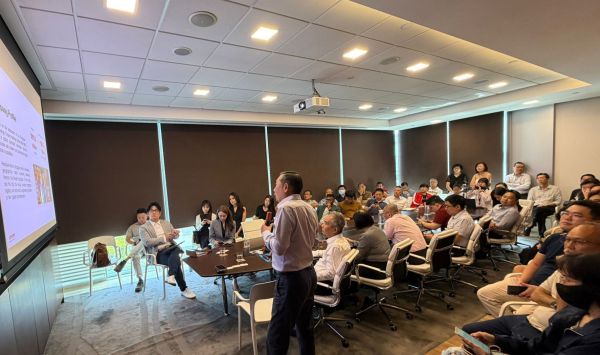
First, to understand Chasen's edge in its core business, "Specialist Relocation".
As management explained in a recent presentation, there are movers and movers but few as qualified as Chasen to handle multi-million-dollar semiconductor and factory equipment that is "very, very sensitive".
You can't just throw this stuff onto a standard truck.
Instead, Chasen employs special material handling tools, like an "air float," where the equipment is literally "riding on a very thin layer of air" so there is "minimum or no vibration at all" as executive director Eddie Seah described it.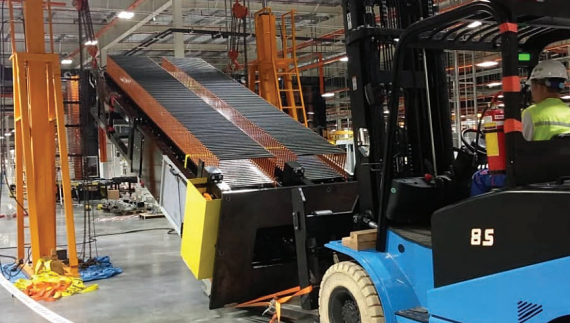
During transport, Chasen uses "air suspension trucks" with fully air-conditioned and humidity-controlled containers to ensure that moisture from the air doesn't ruin sensitive lenses inside the machinery.
As for competition, the reality is while global freight forwarders may claim to offer specialist relocation services, they often lack the specialized equipment and capabilities.
Because they may take on a whole logistics package, they may end up outsourcing the actual relocation work to specialists like Chasen.
| New capabilities & opportunities in AI, EV, "China+1" Waves |
This highly specialized skill set puts Chasen right in the middle of today’s megatrends.
First, there's the "China plus one" strategy. Major manufacturers are diversifying to places like India, Malaysia, and the US to attract lower tariffs.
Chasen is positioned for this shift. In India, its is scoring mandates with conglomerates like Reliance and are eagerly eyeing opportunities at upcoming hi-tech plants.
Second, in the US, automotive electrification trends enabled Chasen to recently bag a US$18 million contract from a Japanese EV battery customer.
On top of EVs and solar, the insatiable demand for artificial intelligence is also a catalyst.
Third, as management noted, more factories are being built and upgraded -- such as Micron's in Singapore -- while data centers are sprouting all over the world, creating opportunities for Chasen's specialized relocation services.
In the US, Chasen recently acquired a specialized construction license to perform "millwright" and "rigging" work.
This means instead of just transporting and then dropping machinery at a factory floor, it now handles the installation from start to finish, translating into more revenue per project.
Fourth, back home in Singapore, the 5-storey Chasen Logistics Hub (completed in mid-2025) in the Pioneer industrial area has become a valuable tangible asset with recurring revenue.
The facility boasts a 65,000 sq ft cleanroom warehouse with vibration-proof and anti-static flooring.
Financially, the hub delivered a S$6.8 million fair value gain this year, accounting for the strong bottom line.
| Insights from the Q&A session |
Here is a summary of selected Q&A from the results briefing session:
The Chasen Logistics Hub & Profitability
Q: With the new Chasen Logistics Hub at 70% occupancy, are you acting like a landlord trying to find tenants for the balance space to break even?
A: Essentially, yes. Management confirmed they are acting "like a landlord" to lease out the remaining clean-room ready space, and the facility is already "near to break even".
One interesting detail impacting their bottom line is that the hub's depreciation is calculated based on its revalued amount of S$110 million, rather than its S$78 million construction cost.
| Exponential India |
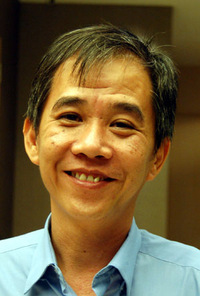 Justin Low, CEO of Chasen, is highly optimistic about the company's prospects over the next few years. He figures India, which is seeing a tech-related boom, will be a massive growth driver for Chasen. In India "we have about 20 to 30 workers. In future, we are looking at 200 to 300." Justin Low, CEO of Chasen, is highly optimistic about the company's prospects over the next few years. He figures India, which is seeing a tech-related boom, will be a massive growth driver for Chasen. In India "we have about 20 to 30 workers. In future, we are looking at 200 to 300." |
Revenue Growth & Order Book Visibility
Q: With the logistics side near break-even, what kind of order book visibility do you have for the core Specialist Relocation business?
A: Management noted strong momentum across the US, India, Malaysia, and China, giving it confidence to set an internal target of "at least 20% growth" in revenue.
High Barriers to Entry
Q: Is the specialist relocation industry fragmented, and what stops smaller movers from taking market share?
A: The ultimate barrier to entry is experience and a proven track record. Moving highly sensitive, multi-million dollar semiconductor or TFT equipment is risky, and the cost of production downtime to the client is massive.
Clients simply will not take a risk on unproven movers; in fact, for major semiconductor projects, vendors must be explicitly "invited" to tender. Chasen currently boasts "60% market share in China" for TFT LCD relocations.
Workforce Scaling
Q: What is the size of your permanent workforce in key growth markets like India and the US, and how will it scale?
A: In India, Chasen has secured S$6 million of contracts and currently have 20-30 employees, but management figures it needs to scale that up dramatically to "200 to 300" workers if a surge in projects materialises.
In the US, is a team of 8 to 10 people which will be boosted by skilled tradesmen on a "permanent contract" basis for specific projects, which aligns with local labor and tax structures.
Strategic Investors
Q: Given your strengths, have you been approached by strategic investors or considered privatization?
A: Yes, they have been approached and "don't reject the possibility" of opening their doors to a strategic investor if the fit is right.
Management highlighted that their established, navigated presence in high-bureaucracy markets like India makes them "alluring" to foreign companies, such as Japanese firms, who want to enter the market but don't know how to navigate the local landscape.
Chasen is marching into FY2027 with ~ S$45.0 million in secured projects.
As the world builds the infrastructure for AI, green energy, and next-gen manufacturing, Chasen has the exact tools—and the track record—to literally do the heavy lifting. |
|||||||||||||||||
 → See also:CHASEN: Eye-catching buyout is Xmas present for shareholders?


