Hong Kong

  • Two Christmases ago in 2017, the HK-listed stock of Leoch International -- China's No.1 supplier of lead-acid batteries to the country's telco industry -- was sitting on a precipice.

    Then it fell throughout 2018 because of the US tariff war against China, which raised the selling prices of Leoch's exports of batteries to the US.

    The tariff war had large ripple effects globally: Orders for Leoch's batteries weakened as both domestic and international clients turned cautious about the economic outlook, and delayed their expenditure on new or replacement equipment.

    Leoch chart11.19After bottoming out in 2019, is the stock poised for an upturn in 2020?
    As though that wasn't enough to dampen business, China imposed stricter regulations that hit the recycling segment of Leoch's business and other battery recyclers.

    They had to shut down their plant for a few months to bolster their anti-pollution equipment and measures.

    And the shortage of recycled lead led to do a jump in PRC prices of lead, the main raw material.

    That ate into the profit margin of its business of manufacturing batteries.

    Well, Leoch's 2018 net profit dropped 56% to RMB106.4 million on RMB9.5 billion of sales.


    Stock price 

    0.58 HKD

    52-week range

    0.53 – 0.81 HKD

    Market cap

    HKD787 m

    PE (ttm)

    6.4

    Dividend yield 

    3.4%

    P/B

    0.2

    Year-to-date 
    return

    -11%

    Shares outstanding

    1.36 b

    Source: Company, Yahoo!

    Not surprisingly, the stock price went deep south, from HK$1.40 level in Dec 2017 to around HK$0.60 by end-2018.

    Since then, it has bobbed up and down a bit.


    This puts the historical PE ratio at around 6 and price-to-book ratio at the very low figure of 0.2.

    While Chairman Dong Li has not prioritised investor relations much in the past, he decided a couple of months ago to hire an investor relations director who also wears the hat of head of capital markets.

    PacitaSze11.19aPacita Sze, IR director of Leoch, speaking with Singapore investors. Photo by Romil Singh.As part of an international outreach, she travelled from HK to Singapore recently to tell the Leoch story to investors, and that's how we met Pacita Sze. 

    It's not only that Leoch trades at cheap valuations.

    Business growth has come back, in part because clients had to, finally, proceed with purchases they had held back on.

    "Growth momentum for the Telecom and Data Center business has picked up since June thanks to increasing client demands from the PRC and overseas markets," said the company in its 2019 interim report released in Sept.

    Telcos and data centres are key clients, accounting for 42.8% of total sales in 1H2019.

    And the business is largely in China, where sales accounted for 60% of Leoch's total revenue.

    The price of lead in China has normalised and the following investments in 2018 are expected to bear fruit from 2020: 

    • Production volume of recycled lead will double, with annual sales potentially reaching RMB4 billion. The expanded plant becomes fully operational in 4Q19.

    • Two new factories in Vietnam will produce lead-acid batteries at lower costs, and account for 10% of Leoch's total production capacity. 

    These factories can serve export markets without being impacted by US tariffs on China-made batteries. 

    • A new RMB1.2 billion lithium-ion battery factory in Anhui, the PRC, will open a new revenue stream -- and no, it is not going to cannibalise its lead-acid battery business.

    Partly, it is because lithium-ion batteries are more expensive, so telecom customers will not have the budget to totally switch over to lithium-ion batteries, especially not when the 5G expansion will be capex-intensive. 


    5G ROLLOUT TO BENEFIT LEOCH
    Leoch batteryFive of the world's top ten carriers use Leoch batteries to guarantee normal operation of their communication networks.The rollout of 5G in China, where 5G licenses for commercial use were issued by the government in June 2019, will trigger investments by telcos, the company said in its 2019 interim report.

    This would "definitely bring the Group new growth opportunities in the near to medium term."  

    The 5G rollout will translate into strong demand for backup power solutions in 5G base stations/small cells and data centres:

    • 5G requires far more base stations --  it is expected that 4.9 million 5G base stations will be set up, or 1.3 times that of 4G, by 2030. Also, 12 million small cells in China.

    • Because the power consumption of a 5G base station is 3X that of a 4G station, the backup power solutions market in China and elsewhere will boom. 

    The 5G rollout will boost also the demand from a growing number of data centres, which Leoch already provides backup power solutions to in China and globally.


    Concerns:

    1. Current liability: Leoch had approximately RMB880 million cash and cash equivalents as at end-June 2019.

    This looks inadequate relative to its RMB2.4 billion of bank borrowings due within a year and classified under "current liability".

    The borrowings rose over the past three years to fund investments in new warehouses and factories in, and outside of, China.

    (For example, the new Anhui and Vietnam plants cost RMB1.5 billion and RMB274 m, respectively).

    We were given to understand that the borrowings are typically rolled over from year to year.

    Liabilities total RMB5.5 billion versus total assets of RMB8.8 billion.

    2. Group gross margins:These are thin (about 12%) at the group level, partly reflecting the mature technology that lead-acid batteries are.

    But the gross margin figure is a blended figure:  The margin for recycled lead being just above break even.

    The margins for the batteries for automotive and motive power are not as great as for network power (ie, selling direct to telcos, which accounts for about half of the total revenue).

    Now, that implies the margin for network power batteries is decent at several percentage points higher than the group blended margin.


  • Excerpts from Phillips Securities report
    Analyst: Eric Li

    Oriental Watch Holdings Limited (398.HK)
    HK operation outperformed the market, Conservative spending on high-end luxury goods become a concern 


    Oriental Watch Holdings Limited (Oriental Watch), founded in 1961, has developed an extensive retail shop network in the Greater China area, and has become one of the largest watch retailers. Company carries around a hundred prestigious brands, in particular, famous Swiss brands such as Rolex, Tudor, Piaget, Vacheron Constantin, IWC, Jaeger-LeCoultre, Girard Perregaux, Longines, Omega, etc.

    Company operates a total of 12 shops in HK SAR and Macau SAR, including Oriental Watch Company, La Suisse Watch Company, Rolex and Tudor Boutique and Breitling Boutique. In 2004, company expanded its watch retail business to Mainland China. Since then, company has opened a number of outlets and boutiques covering various cities in Mainland, China. Subsequently, company has further expanded its businesses to Taiwan region. As at 30 September 2022, company operates 44 retail points (including associate retail stores) in the Greater China region, and 1 online store in each of the Mainland China and HK respectively.
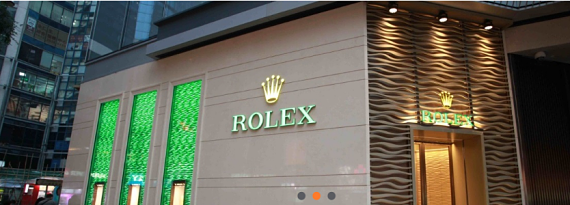
    OrientalWatch rolexOriental Watch's dividends have high yields (~16%) with payout ratios exceeding 100% in the past 3 years. See table below.
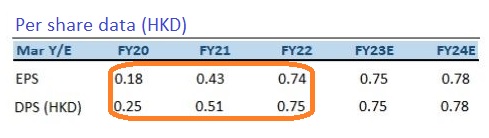
    OrientalWatch dividend

    HK operation outperformed the market with revenue increased by 6.1%

    Stock price

    HK$4.52

    52-week
    range

    HK$3.25 – HK$4.91

    PE (ttm)

    6.4

    Market cap

    HK$2.2  b

    Shares outstanding

    487 m

    Dividend 
    yield 
    (ttm)

    16%

    1-year return

    4.4%

    Source: Yahoo!

    In 1HFY2023 (for the six months ended 30 September 2022), company's revenue decreased by 10.0% yoy to HK$1,674 million, which was mainly attributable to the decrease in revenue in the Mainland China market as a result of business interruptions due to such lockdown policy and restrictions.

    In line with the decrease in revenue, gross profit decreased by 6.9% to HK$537 million, with gross profit margin increased by 1.1 percentage points to 32.1%, and profit attributable to owners of the company decreased by 9.6% to HK$151 million. Basic EPS were 31.03 HK cents, down 9.2% yoy.

    Interim dividend of 7.8 HK cents per share (1HFY2022: 8.6 HK cents per share) and a special dividend of 23.5 HK cents per share (1HFY2022: 25.8 HK cents per share).

    Oriental Watch

    Share price: 
    HK$4.52

    Target: 
    HK$5.14

    During the Period, the company's aggregated expenses related to leases increased slightly by 5.3% to HK$80 million, accounting for 23.1% of the overall operating expenses (1HFY2022: 22.2%). The increase was mainly due to the lease renewal of retail stores which command a relatively higher rental rate.

    In Hong Kong, the COVID-19 pandemic situation has been under control since the first quarter of 2022. Yet, clouded by market uncertainty, the market sentiment remained cautious with the value of total retail sales decreased by 1.3% yoy during the first nine months of the year.

    However, sales of jewelry, watches and clocks, and valuable gifts recorded a slight increase of 0.2% during the same period. Despite the uncertain retail market sentiment, Hong Kong operation still outperformed the market with revenue increased by 6.1% to HK$504 million for the period, accounting for 30.1% of the overall revenue, segment profit increased by 81.8% to HK$42.75 million.

    According to the National Bureau of Statistics, the PRC`s gross domestic product (GDP) has recorded a 0.4% yoy growth and 3.9% yoy growth in the second and third quarter respectively, which grew at a softer pace compared with the same period of last year. The slowdown of economic growth was attributable to the widespread lockdown as well as the weakening market sentiment. Sales of gold, silver and jewelry also recorded a decrease of 0.8% yoy from April to September 2022.

    According to the Federation of the Swiss Watch Industry FH, the Swiss watch exports to the PRC during the Period decreased 13.7% yoy to CHF1,267.3 million, showcasing the country`s conservative sentiment on purchasing luxury watches.

    Due to the economic condition as well as the temporary business suspension mentioned above, revenue from Mainland China operation decreased by 15.4% to HK$1,101 million, accounting for 65.8% of the overall revenue, segment profit decreased by 23% to HK$189.86 million.

    Investment Thesis
    Looking ahead, although China and Hong Kong have entered the road to normal after the epidemic, with the uncertainty from the increase in interest rate, and the management also expects consumers to become more conservative in consumption, especially on purchasing of high-end luxury goods.

    Hence, the business will be under some pressure over the upcoming periods.

    We expect FY2023-FY2024 EPS to be 74.62 HK cents and 78.10 HK cents respectively, with PT of HKD5.14, implies a FY2023E P/B of 1.21x (~1-yrs historical average plus 1 SD).

    Our investment rating is “Accumulate”.


    Risk factors
    1) Economic recovery momentum is slowing down;
    2) Operating costs are higher than expected;
    3) Luxury goods consumption is lower than expected.

 

We have 995 guests and no members online

rss_2 NextInsight - Latest News